
The Bail Profession: Building Circles of Accountability
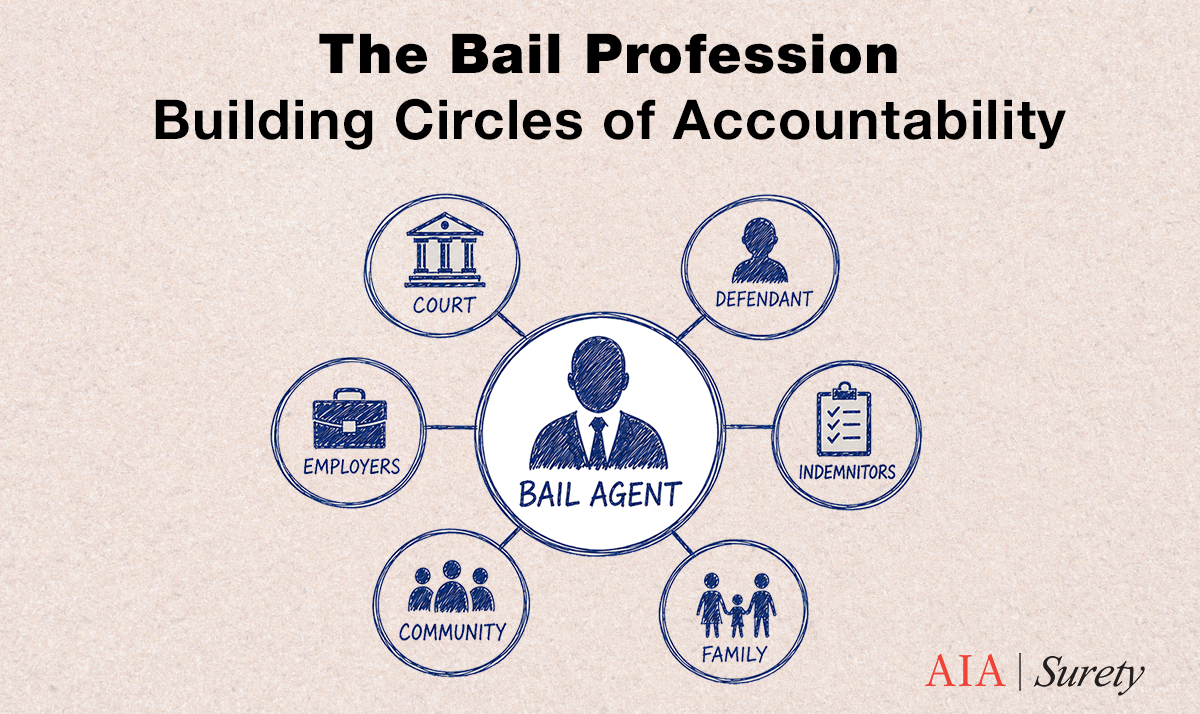
Commercial bail is often discussed in terms of financial guarantees and court appearances, but the bail profession involves far more than posting a bond. Licensed bail agents regularly work with defendants, families, indemnitors, employers and community members to build accountability throughout the court process. While every case is different, the strength of the surety system often lies in the network of people who encourage defendants to meet their court obligations and move through the justice system responsibly.
 In the criminal justice system, few professions are as directly responsible for ensuring that the system operates both effectively and efficiently as the commercial bail industry. While judges set the conditions of release and prosecutors argue for detention or supervision, it is licensed bail agents who often carry the daily responsibility of making sure defendants actually appear. And when defendants appear in court, the system gets a chance to work and victims of crime get a chance at justice.
What makes the surety bond system uniquely effective is not just the financial stake involved, but something far more personal: the creation of a circle of influence around each defendant.
Family and Friends: The First Line of Accountability
At the core of every surety bond is the requirement that someone, usually a family member or close friend, co-signs as an indemnitor. This person pledges their own assets or credit to guarantee the defendant’s appearance. Far from being a mere formality, this co-signer becomes an active participant in the defendant’s compliance.
Bail agents routinely work with these co-signers, keeping them informed of court dates, reminding them of their responsibilities, and enlisting their help in monitoring the defendant’s behavior. When a defendant knows that missing court will not only result in their own arrest but could also financially harm a loved one who co-signed for them, the incentive to appear becomes much stronger. This personal connection creates a level of accountability that purely government-run supervision programs often lack.
Family members and friends also serve as an early warning system. They are often the first to notice when a defendant is struggling with substance abuse, associating with negative influences, or showing signs of planning to flee. Because bail agents maintain regular contact with co-signers, they can intervene early, something that is far more difficult when release is granted without this built-in support network.
Expanding the Circle: Churches and Employers
What truly sets the bail profession apart is the way agents actively expand this circle of influence beyond immediate family. Experienced bondsmen understand that long-term success often depends on connecting defendants with positive community institutions.
Many bail agents work directly with local churches, which frequently serve as powerful stabilizing forces. Churches can provide spiritual guidance, community support, transportation to court, and even job placement assistance. When a pastor or church leader becomes part of the accountability circle, defendants often feel a deeper sense of responsibility, not just to the court, but to their faith community.
Bail agents also frequently coordinate with employers. A stable job is one of the strongest predictors of court appearance and law-abiding behavior while out on bond. By working with employers to verify employment and sometimes even advocating for defendants to keep their jobs, bail agents help create another layer of structure and incentive. Losing a job because of a failure to appear or new criminal activity carries real-world consequences that many defendants take seriously.
This proactive relationship-building with churches and employers is largely unique to the commercial bail industry. Government pretrial services programs and charitable release organizations typically do not have the same flexibility, resources, or community connections to build these types of networks on a consistent basis.
Why This Model Endures
The effectiveness of the surety bond system is not theoretical. Multiple studies have shown that defendants released on commercial surety bonds have significantly higher court appearance rates than those released on their own recognizance or through many pretrial supervision programs. The combination of financial consequences and personal accountability creates powerful incentives that are difficult to match.
More importantly, the circle of influence model addresses root causes rather than just symptoms. By involving family, friends, churches, and employers, bail agents help surround defendants with people and institutions that have a vested interest in their success. This support structure not only increases the likelihood of court appearance but also reduces the chances of new criminal activity while out on bond.
In an era when many jurisdictions are experimenting with reducing or eliminating financial conditions for release, the bail profession continues to demonstrate why its model remains effective after more than a century. The circle of influence, built one relationship at a time, is not just a business practice. It is a proven method of creating accountability that protects both defendants and the communities they return to.
The bail agent’s job is not finished when the bond is posted. In many ways, that is when the real work begins.