
Criminal Justice Policy Across America for Sale to the Highest Bidder
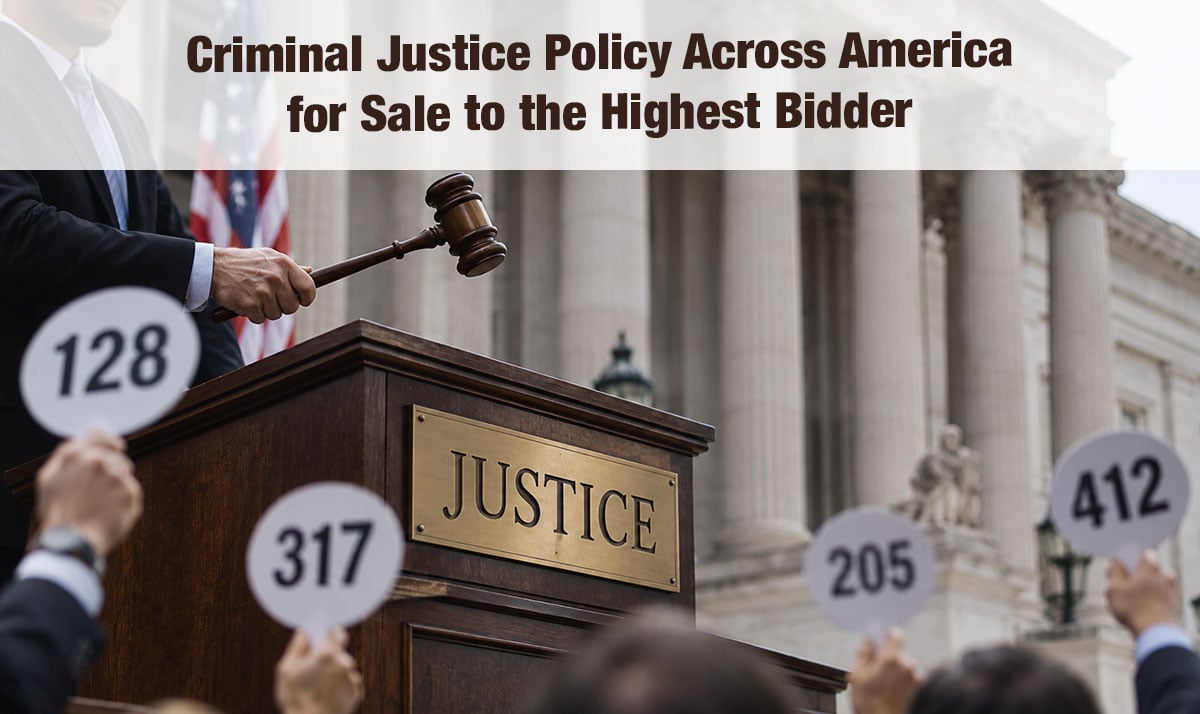 Across the country, we have seen many instances of criminal justice policy shifting away from law and order and moving towards more social justice goals of reducing jail populations, limiting financially secure release, and electing “reform” prosecutors. And the disturbing thing about this shift is that much of it has not been driven by local voters or frontline experience. Instead, it has been pushed forward by large grants and political donations from progressive billionaires and foundations.
How Outside Funding Influences Pretrial Release
A recent first-person account from Allegheny County, Pennsylvania, illustrates one mechanism. In “I Warned Them. They Took the Money. A Children’s Doctor Is Dead,” published by Law Enforcement Today, former pretrial investigator Kelly Rae Robertson describes how grant funding reshaped bail recommendations.
Robertson spent 14.5 years in Allegheny County Pretrial, writing bail recommendations and evaluating defendants. She writes that after major grants arrived, particularly from the MacArthur Foundation, which funded efforts to lower the jail population, and support from the Heinz Endowments for bail-related work, release became the practical mandate. The success of an office was no longer measured by things like crime reduction and public safety but rather it was measured by innocuous things like reducing the number of people held on monetary bonds. Non-monetary (cashless) release recommendations became the default path to meeting grant targets. When magistrates resisted, an “Arnold Unit” (tied to risk-assessment tools associated with Arnold Ventures) overrode decisions in favor of release. Robertson says magistrates who pushed back faced career pressure.
She describes repeatedly warning her supervisors that specific defendants should not be released. One of them, Elijah Hemingway, had been charged with a burglary involving forced entry into a former partner’s home and was released on a zero-dollar non-monetary bond. He later broke into the home of Dr. Idris Evans, a pediatric critical care physician at UPMC Children’s Hospital of Pittsburgh, and stabbed him to death while he slept. Evans’s wife was critically injured. Their children, ages 8 and 12, fled to a neighbor’s porch. Robertson states this was not the first such outcome she observed after releases driven by the grant metrics. Success was counted in lower jail numbers and fewer monetary bonds; post-release violence was not the measured outcome.
Billionaire Donors and Criminal Justice Reform
This local example fits a larger pattern. George Soros, through Open Society Foundations and related entities, has spent tens of millions supporting progressive district attorney candidates who favor reduced prosecutions, cash bail limits, and alternatives to incarceration. Open Philanthropy (backed by Facebook co-founder Dustin Moskovitz) has directed hundreds of millions into criminal justice reform groups, including organizations focused on bail funds, prosecutor networks, and policy advocacy that favor lower pretrial detention. Other donors, including figures connected to Netflix co-founder Reed Hastings and additional tech and finance wealth, have funded similar state-level efforts in places such as California. Source: The Washington Post.
These interventions are not secret. Foundations publish grant lists, and campaign finance reports document the spending. The stated goals are reducing racial disparities, lowering costs, and addressing what funders view as over-incarceration. The practical effect in multiple jurisdictions has been substantial changes in charging, bail, and release practices, sometimes against local public opinion after subsequent crime increases.
Measuring the Public Safety Consequences
Critics argue the funding creates misaligned incentives. When grant success is defined by fewer people in jail, local officials face pressure to release more defendants, including those with serious charges. When outside money elects prosecutors who announce they will not pursue certain categories of cases, charging decisions shift regardless of local crime trends. Public safety outcomes, recidivism, new violent offenses by released defendants, and clearance rates receive less systematic tracking than the metrics funders reward.
The Allegheny County account raises a concrete question that goes beyond the abstract debate: when grant conditions or external funding priorities reward lower detention numbers, how thoroughly are the downstream public-safety costs measured and disclosed? Robertson’s piece argues that in her office they were not, and that the result included the death of a children’s doctor whose killer had been released under the new regime.
Similar dynamics have appeared in other cities that adopted bail reform, progressive prosecution, or MacArthur-style Safety and Justice Challenge grants. Some jurisdictions discover the failings of these policies after a high-profile case involves one of these released defendants and makes changes. Other jurisdictions have just continued the approach. What drives these decisions really comes down to how much outside funding and political support the jurisdiction is actually receiving.
Who Is Driving Criminal Justice Policy?
Voters and local officials ultimately control statutes, budgets, and elections. But the influence of these large grants and donors cannot be ignored. And it really begs the question: What is driving criminal justice reform, fairness, justice or is it all just about the money?