
Cash Bail vs. Surety Bail: Bail Reformers’ Misleading Conflation
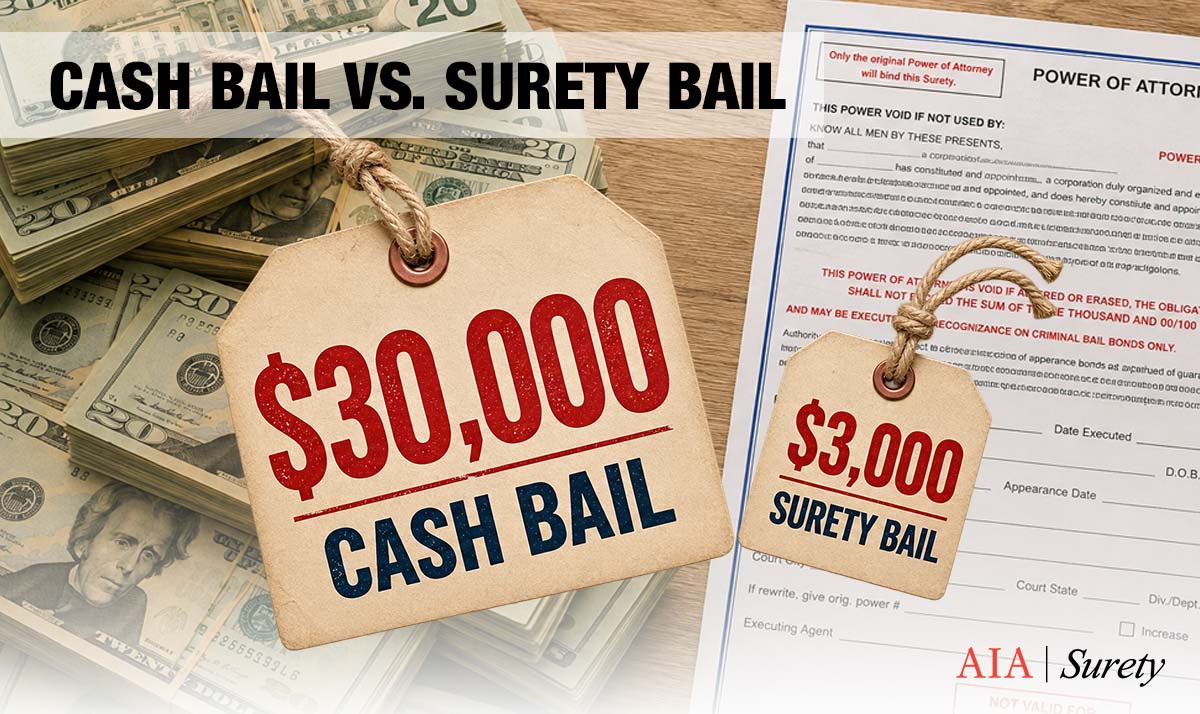
In a recent article from the West Virginia Center on Budget & Policy, the author argues that high cash bail is the root cause of rising county jail bills and growing pretrial detention. While the piece raises legitimate concerns about the high cost of pretrial incarceration and the financial pressure on counties, it blames and conflates two very different release mechanisms: cash bail and surety bail. That confusion leads to a fundamental misunderstanding of how the commercial bail system actually works.
Cash Bail vs. Surety Bail: They Are Not the Same Thing
Cash bail requires the full bail amount to be posted in cash (or sometimes property) with the court. If the defendant appears as required, the money is returned at the end of the case (minus any fees or fines). For someone facing a $20,000 or $30,000 bail, posting the full amount is often impossible. The result is pretrial detention.
Surety bail (also called a surety bond) is a financial insurance instrument and works differently. A licensed, regulated bail agent posts a surety bond for the full amount of the bail with the court. A surety bond is a financial guarantee to the court, for the full amount of the bond, that the defendant will appear. The defendant or their family pays for the surety bond by paying the bail agent a non-refundable premium—typically 10% of the total bail amount. This is very similar to the premium you pay on other types of insurance products. The defendant is released. If the defendant fails to appear, the bail agent is responsible for locating them and is financially liable to the court.
This distinction matters. Surety bail is not a detention tool. It is a release mechanism designed to make release possible for people who cannot afford to post the full cash amount.
Surety Bail Does Not Drive Up Jail Populations
The claim that money bail, or the involvement of bail agents, increases jail populations gets the causal relationship backward. When a court sets a bail amount and a defendant cannot post the full cash amount, the availability of a surety bond is often the only practical path to release. Without the option of a surety bond for defendants and their families, many would simply remain in jail.
In jurisdictions with active surety bail systems, surety bonds provide a path to pretrial release for defendants who would otherwise be unable to post the full cash bond. The bail agent’s financial incentive is aligned with appearance: the agent only profits if the defendant shows up and the bond is eventually exonerated. That private accountability structure has historically produced strong appearance rates without requiring the government to house the defendant. For more information on research examining secured release, see AIA Surety’s pretrial release resources and studies.
Framing surety bail as the cause of detention ignores the alternative. If courts set high bail amounts and eliminate or severely restrict commercial sureties, the predictable result is more people sitting in jail, not fewer.
Bail Is a Release Tool, Not a Punishment
The original purpose of bail is to secure a defendant’s appearance in court while allowing pretrial liberty. It is not intended as punishment or as a means of preventive detention. When courts set bail amounts that exceed what ordinary people can post in cash, the system fails that purpose, unless a surety option exists to bridge the gap.
Criticizing “cash bail” while treating surety bonds as part of the same problem obscures this reality. The two are functionally opposite in their effect on detention. Cash-only requirements detain people who lack liquid assets. Surety bonds release them by leveraging a private guarantee and a modest, affordable premium. AIA has addressed this distinction further in Do Charitable Bail Funds Even Understand What Surety Bonds Are?
A More Accurate Diagnosis
Rising jail costs in West Virginia (and elsewhere) deserve serious attention. Long case processing times, high rates of felony filings, limited use of non-financial release for those who are truly indigent and have special needs, and broader criminal justice practices all contribute. Blaming the commercial bail system for those costs misdirects the conversation.
If the goal is to reduce unnecessary pretrial detention and the resulting county expenses, the focus should be on:
- Speeding up case resolution so people do not sit for months awaiting trial
- Ensuring bail amounts are reasonable and not set as de facto detention
- Preserving release options—including surety bonds—that actually get people out of jail
- Targeting detention only for those who pose genuine flight or safety risks that cannot be managed through other conditions
Surety bail remains one of the primary tools that makes release affordable for working people and families who cannot write a check for the full bond. It is a release mechanism, not a detention mechanism. Treating it as the problem is misleading and pushes policymakers toward solutions that would likely increase, rather than decrease, the number of people held in jail before trial.
Great article…Bail reform activists always refer to cash bail knowing that surety bail is different. In fact, one could say that surety bail is the original bail reform option and the most affordable. When defendants can’t afford the full cash amount, bail agents charge a fraction of the cost and provide the same level of security to the court. A win win for everyone. The defendant gets out, the court has its financial security and the community knows someone is watching that defendant.